Behind the Counter and Against the Clock: What's Really Happening During Your Pharmacy Wait
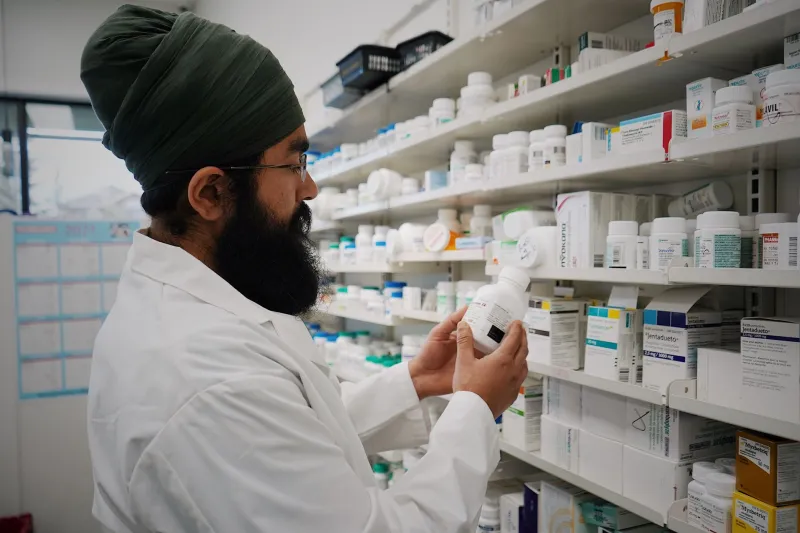
You arrive at the pharmacy with what feels like a simple request. You hand over a prescription, glance at a nearly empty waiting area, and mentally calculate that you'll be back in your car within fifteen minutes. Then the waiting begins. The clock moves. The line barely does. And by the time your name is finally called, you've burned through half a podcast episode and most of your patience.
This experience is so universal among American patients that it has become something of a cultural punchline. But the frustration tends to obscure a more important truth: the time between dropping off your prescription and picking it up represents one of the most consequential—and systematically underappreciated—processes in modern healthcare. At TabOrderRx, we believe that informed patients make better decisions about where, when, and how they access their medications. So let's pull back the curtain.
The Moment You Hand Over That Slip of Paper
From the patient's perspective, submitting a prescription looks like a simple handoff. From the pharmacy's perspective, it triggers a cascade of verification steps that begin before a single pill is counted.
The first task is data entry and prescription validation. A pharmacy technician must transcribe every detail from the written or electronic order—drug name, dosage, quantity, prescriber information, and refill authorizations—into the dispensing system. Errors at this stage can have downstream consequences for patient safety, so accuracy is non-negotiable. Even a minor discrepancy between what was written and what appears in the system can force a callback to the prescribing physician's office.
That callback alone can add anywhere from ten minutes to several hours to a patient's wait, depending on how quickly the prescriber's office responds. On a busy Tuesday afternoon, a physician's office may be fielding dozens of similar calls simultaneously.
Insurance Verification: The Invisible Bottleneck
Once the prescription data is entered, the pharmacy submits a real-time electronic claim to your insurance plan. In theory, this is a seamless digital transaction. In practice, it is one of the most common sources of delay at the pharmacy counter.
Insurance rejections occur for a wide variety of reasons. Your plan may require a prior authorization before it will cover a specific drug. The medication may be classified as a non-preferred brand when a generic equivalent exists. You may have already reached your monthly quantity limit. Your coverage may have lapsed or changed since your last visit. Each of these scenarios requires a pharmacist or technician to investigate the rejection code, interpret what it means, and determine the appropriate response.
Prior authorization requests—in which the pharmacy must contact your insurer to obtain approval for a specific medication—are particularly time-consuming. These requests often require clinical documentation from your physician, meaning the pharmacy must coordinate between your insurer and your doctor's office simultaneously. According to the American Medical Association, physicians and their staff spend an average of nearly two business days per week managing prior authorization requests. Pharmacies face a parallel burden.
Drug Interaction Screening: The Step No One Sees
While the insurance question is being resolved, the pharmacy's clinical software is running a separate but equally important process: cross-referencing your new prescription against every other medication currently on file in your profile.
Drug interaction screening is not a formality. It is a genuine patient safety mechanism that catches potentially dangerous combinations before they reach the patient. Certain drug pairings can alter how a medication is absorbed, increase the risk of bleeding, or cause life-threatening cardiac events. When the system flags a potential interaction, a licensed pharmacist—not a technician—must personally review the alert and make a clinical judgment about whether to proceed, modify the prescription, or contact the prescriber.
This review process takes time, and appropriately so. Pharmacists are often the last clinical checkpoint before a medication reaches a patient's hands. Rushing that review to reduce wait times would be a dangerous trade-off.
The Physical Dispensing Process
Once insurance is approved and the drug interaction review is complete, the actual dispensing can begin. A technician retrieves the medication from inventory, counts or measures the correct quantity, and affixes a label that must include the patient's name, dosage instructions, prescriber information, and relevant warnings. Controlled substances require additional verification steps under federal and state law.
Before the prescription is placed in the pickup bin, a pharmacist conducts a final visual inspection of the filled prescription. This verification step—checking that the right drug, in the right strength, in the right quantity, has been accurately labeled—is another layer of protection that adds minutes but prevents errors that could cause serious harm.
Staffing Realities That Compound Every Delay
All of the above occurs within a staffing environment that has been under significant strain for years. The United States is experiencing a documented shortage of licensed pharmacists, particularly in retail settings. Many chain pharmacies operate with skeleton crews during off-peak hours, meaning that a single pharmacist may be simultaneously managing the prescription queue, fielding patient counseling questions at the counter, answering phone calls from physicians' offices, and supervising technicians—all at once.
When one task takes longer than expected—a complicated insurance rejection, a drug interaction that requires a prescriber callback—it creates a ripple effect across every prescription in the queue. The three people ahead of you in line may each have straightforward pickups, but if the pharmacist is on hold with an insurance company's prior authorization hotline, everyone waits.
What This Means for Patients Who Order Digitally
The operational complexity described above does not disappear when patients use online pharmacy platforms or mail-order services. However, the structure of those services does allow for greater scheduling flexibility. When you submit a prescription through a platform like TabOrderRx, the insurance verification, interaction screening, and fulfillment steps occur without requiring you to stand at a counter. The work still happens—but it happens asynchronously, on your behalf, without consuming your afternoon.
For patients managing chronic conditions who refill the same medications on a predictable schedule, this model can eliminate the situational frustration of the pharmacy wait entirely. For those who require urgent same-day access, understanding the behind-the-counter process helps set realistic expectations and may prompt conversations with prescribers about submitting orders earlier in the day or earlier in the week.
Reframing the Wait as a Safety Interval
The next time you find yourself checking your watch in a pharmacy waiting area, consider reframing what that time represents. The delay is not a failure of service. It is the duration of a multi-step clinical process that exists specifically to protect you—from billing errors, dangerous drug combinations, and dispensing mistakes.
American pharmacies fill over four billion prescriptions annually. The fact that the overwhelming majority of those transactions are completed accurately is a testament to the professionalism of pharmacists and the rigor of the systems they operate within. The wait is, in many respects, the point.
That said, systemic inefficiencies in insurance processing and prior authorization workflows do impose real costs on patients and pharmacy staff alike. Advocating for streamlined authorization processes, exploring digital pharmacy options for routine medications, and submitting refill requests well ahead of need are practical steps every patient can take to reduce the friction—without sacrificing the safety that the process is designed to provide.